
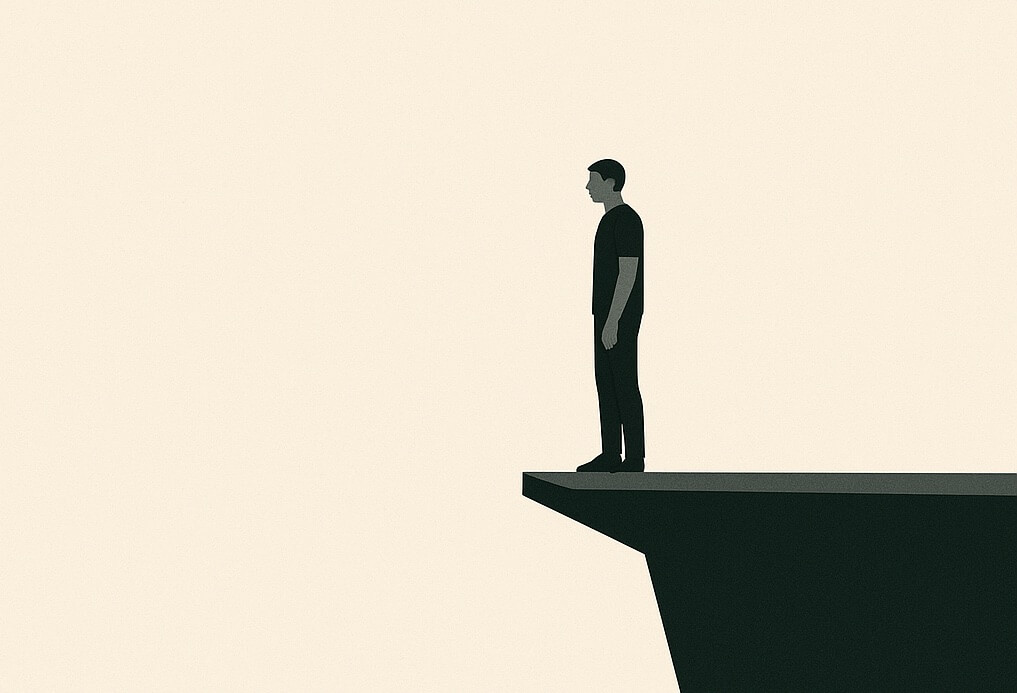
If you are not prepared for the hard thing, given the opportunity, you’ll go for the easy option. Case in point: me.
I intend to do this writing—the hard thing—and then I click on my browser and YouTube wants to tell me about F1, the easy thing. No disrespect towards the easy action. For some reason, I love to watch cars speed around a race track at ridiculous speeds. But it’s a very easy action to take. It takes much more to stay with the hard thing.
Here are some thoughts about why that is so, and what we can do to make the harder thing easier. Which sounds like a kind of oxymoron, but what if the hard thing is what you really want? The choice that’s most likely to fill you up.
Life is full of these hard actions we avoid doing. Once I’ve set my mind on something, guaranteed something else will come and pull me in a different direction. And let’s say I click on that seductive video, what’s the true cost, aside from the time lost? I’d argue it’s usually more than we think.
What I forget is that it’s my life I’m giving—these small moments that make up the bigger arcs of time. That become the patterns that shape my future self.
These small choices matter. At the same time, I can also err in the other direction, putting pressure on every moment to make it count. That’s its own form of insanity. So what does the middle ground look like? How do I do more of the hard things, without making life impossibly hard overall?
One way is to give yourself permission to do nothing at all which, it turns out, is a lot harder than it seems. And possibly a step up from the F1 video that calls to the distractor parts of me. These moments of pause and non-doing are sometimes themselves expressions of the hard thing. Especially in modern society, where we have to contend with all the voices calling us lazy or unproductive. But what if the pause gives you the space to find the right action?
Epictetus, in his way, warned against wishing life away. Even the waiting is part of it. You remember wanting to get there, on the way to the beach. But you wouldn’t actually want to fast-track it so that you didn’t have the experience of not being there yet. That part is just as valid as arriving—an expression of life.
There are all kinds of moments, and we can’t hope to be doing the most productive thing in every one. But we can aim for the hard part: to stay with experience, especially when it isn’t the way we want it to be.
“Don’t demand that things happen as you wish, but wish that they happen as they do happen, and you will go on well.” —Epictetus
Back to my F1 example: does doing the hard thing mean I should never exchange ten minutes of my life for the experience of seeing cars go fast around a track? To my mind, not at all. We have a very real need for non-directional time, especially in a modern context. If it’s always about doing and achieving, we’re sure to run into crisis at some point.
Time that’s playful in nature, or relaxing, or that disconnects us from the directional drive of our lives—that time is essential.
There’s also no way to avoid getting distracted. I don’t imagine there’s anyone on this planet who’s 100% focused all the time. It’s more realistic to see distraction as a normal, even useful part of the day. You can wake up inside the distraction, and see what it’s trying to do for you.
Most of the time, it’s just trying to take us away from discomfort or pain. But what if we stayed with the uncomfortable experience, even if that’s just our old friend boredom? It could be anything. What happens when you don’t resist it, but let it in for a moment—get to know it, even if just for 30 seconds? Doing nothing more than not trying to change your experience.
As Gary Keller likes to say:
“What’s the ONE Thing I can do such that by doing it, everything else will be easier or unnecessary?”
