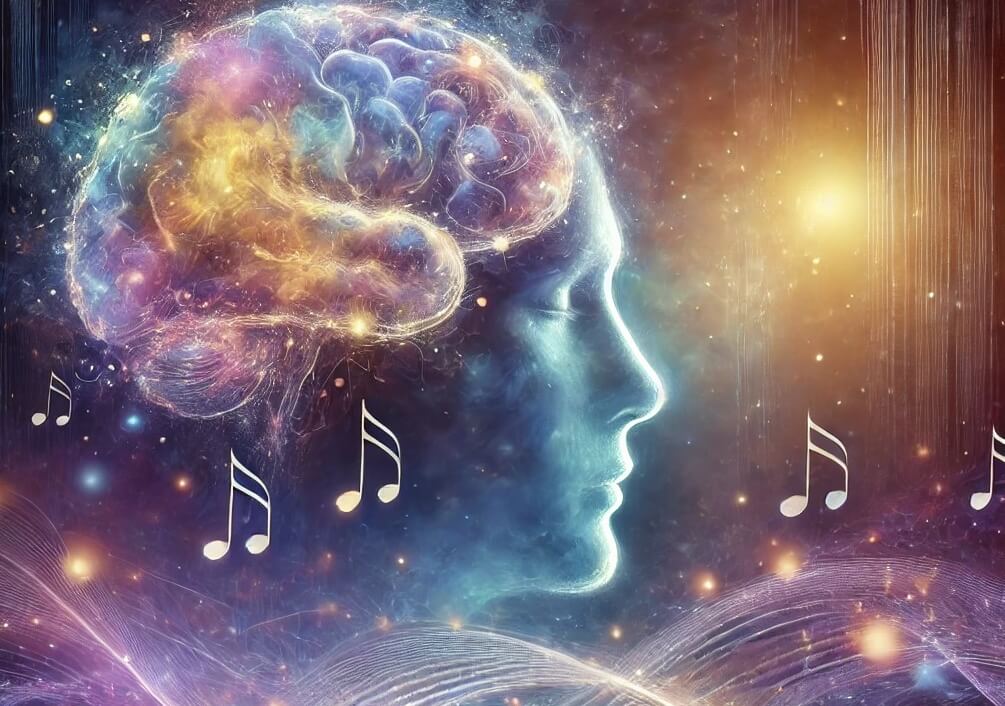
Daniel Levitin, a neuroscientist and musician, has long explored the deep connections between music and the brain. His work suggests that music is more than entertainment—it is medicine. Just as pharmaceuticals interact with neurochemistry to heal the body and mind, music influences neural pathways, reducing stress, enhancing mood, and even alleviating pain. Levitin’s research highlights how rhythm, harmony, and melody engage the brain’s reward system, promoting the release of dopamine, serotonin, and oxytocin—key neurotransmitters linked to well-being.
Levitin’s books, including This Is Your Brain on Music and The Organised Mind, emphasise that music is fundamental to human cognition and emotional regulation. He explains that our brains evolved to process music as a survival tool, enhancing social cohesion, memory, and emotional processing. One of his key insights is the role of predictive coding in music—our brains anticipate patterns in melody and rhythm, creating a sense of pleasure when those expectations are met or creatively subverted. Additionally, he underscores how different musical structures can induce specific states, such as relaxation through slow tempos and syncopation or alertness through fast, rhythmic beats.
In therapeutic settings, music has been shown to be particularly effective in managing anxiety, depression, and neurodegenerative diseases. Its structured yet emotionally rich nature provides a framework for cognitive and emotional processing, much like a well-balanced medicinal compound. This idea has taken on new significance in the realm of psychedelic-assisted therapy, where music serves as a guide through altered states of consciousness. Carefully curated soundscapes in psilocybin, MDMA, and ketamine therapy sessions help patients navigate profound emotional and psychological landscapes. Music in this context is not background noise but an active agent, shaping experiences, anchoring insights, and fostering deep healing.
Levitin’s perspective encourages us to see music not just as art, but as a fundamental component of human health. As research continues to illuminate its therapeutic power, we move closer to a future where medicine is not only prescribed in pills but also in melodies, harmonies, and rhythms—soundscapes that heal from the inside out.
Where music is different from speech is that it is a whole-brain activity.
Speech activates a speech network, but music activates every area of the brain we know of—it’s a whole-brain activity. That’s according to a study undertaken by Daniel Levitin.
Music connects parts of the brain that may not otherwise be connected, making it a great unifier of the brain. Music with a beat and rhythm naturally makes you want to move—babies do it instinctively before they even understand it.
Infants go through speech babbling, which is well-known, but they also go through a kind of musical babbling, which often precedes speech babbling. They naturally play with song and sound. Levitin believes this is because music is hardwired in us; we are a musical species. Infants are doing what other species have always done—birds and whales had song long before humans existed. The idea is that music is innate and fundamental.
What’s crucial here is that children respond to music even before they know it means anything. That’s the power of music—it doesn’t have a specific meaning. Composers and lyricists can have an intent, but good music contains the kind of ambiguity that good poetry does. Music is intentionally non-referential—there is no melody that will tell you to open the door, for instance. Music, by its nature, allows us to map our own experience onto this canvas of sound. Depending on our mood, we experience music differently.
The mammalian brain is a pattern detector; it is a prediction device—anticipating what will happen next to avoid harm. Music is a wonderful exercise and play for the brain because it is highly structured. The essence of music is that it engages the brain in a giant game of expectation and prediction. That’s why it can be so engaging—it moves us to make meaning, and each of us does so in our own unique way.
How might you develop music appreciation ?
- Create Personalised Playlists
- Build playlists for different emotional states—calmness, focus, joy, or release. These can be your go-to when you need them.
- Use music with steady rhythms for relaxation and high-energy beats for motivation.
- Use Music to Regulate Emotions
- Turn to music consciously when feeling overwhelmed or low.
- Experiment with different genres to discover what best soothes or energises you.
- Develop a Daily Music Habit
- Start and end your day with intentional listening.
- Incorporate background music into activities like cooking, reading, or working out.
- Engage Actively with Music
- Sing, hum, or play an instrument to enhance the therapeutic effects.
- Curate Music for Deep Experiences
- Use binaural beats or nature sounds to deepen relaxation and introspection.
Suggested Composers and Musical Scores
Levitin often highlights the importance of developing musical appreciation through exposure to a variety of styles. For those looking to deepen their engagement with music, he suggests exploring:
- Johann Sebastian Bach – Known for mathematical precision and emotional depth, Bach’s compositions, such as Goldberg Variations and Cello Suites, are excellent for focus and relaxation.
- Ludwig van Beethoven – His symphonies, particularly Symphony No. 6 (Pastoral) and Moonlight Sonata, can be deeply moving and meditative.
- Brian Eno – A pioneer in ambient music, his albums like Music for Airports and Apollo are widely used in therapeutic settings.
- Max Richter – His album Sleep is specifically designed to promote deep rest and relaxation.
- Philip Glass – His minimalist compositions, such as Glassworks, create a hypnotic effect that can aid in meditation and emotional processing.
- Alice Coltrane – Combining jazz with spiritual depth, albums like Journey in Satchidananda are excellent for contemplative states.
- Ravi Shankar – His classical Indian sitar compositions are known for their meditative and trance-inducing qualities.
- Gustav Mahler – His symphonies, particularly Symphony No. 2 (Resurrection), Symphony No. 5, and Symphony No. 9, are known for their vast emotional range and introspective depth, making them powerful for catharsis and reflection.
Peter Levine’s Sound-Based Regulation Techniques
Peter Levine, known for his work in Somatic Experiencing, uses sound and vocalisation to regulate the nervous system. Two key techniques include:
- Sound of Enonation – This involves humming or vocalising sounds such as “Ahh,” “Ooo,” or “Mmm,” allowing the vibrations to resonate through the body. This helps release tension, regulate emotions, and calm the nervous system.
- Voo Sound Technique – A powerful grounding method where one takes a deep breath and exhales while making a deep “Voooooo” sound. This vibrates the diaphragm and vagus nerve, promoting relaxation and a sense of safety.
Joni Mitchell’s Story: Music as Recovery
Joni Mitchell, the legendary singer-songwriter, experienced a life-altering health crisis when she suffered a brain aneurysm in 2015. The condition left her unable to walk or speak, and her recovery seemed uncertain. However, music played a vital role in her healing process. Daniel Levitin played an integral part of her recovery.
As part of her rehabilitation, Mitchell re-engaged with music by listening to her own songs and playing the guitar again. The act of strumming and singing helped rebuild her neural connections and restore her motor skills. She also immersed herself in jazz and classical music, which she had long admired. Over time, the rhythm, melody, and engagement with music contributed to her physical and emotional recovery, allowing her to regain her strength and even return to performing live in 2022.
Joni Mitchell’s journey illustrates how music can be an essential tool for healing—supporting brain plasticity, emotional resilience, and the restoration of lost abilities. Her story reinforces the power of sound and rhythm in recovery.
By integrating these musical habits into daily life (in a playful way) and exploring masterful compositions, music becomes a reliable therapeutic tool—offering a means to regulate emotions, deepen experiences, and enhance overall well-being.
Practice suggestion – Take a moment to reflect on the role music has played in your life. What songs or compositions do you turn to when you’re going through a hard time? Consider making a personal playlist of music that soothes, energises, or brings you comfort. By intentionally curating a selection of tracks that truly resonate with you, you create a powerful resource—one that becomes a source of comfort and healing during those times when music really is the only medicine.